FRANCES TOPHILL PROFILE
The ‘naughty’ TV gardener designing a Chelsea showstopper for the King and David Beckham. Gardeners’ World’s Frances Tophill reflects on her decade on screen and the thoughtful touches that bring her first show garden to life
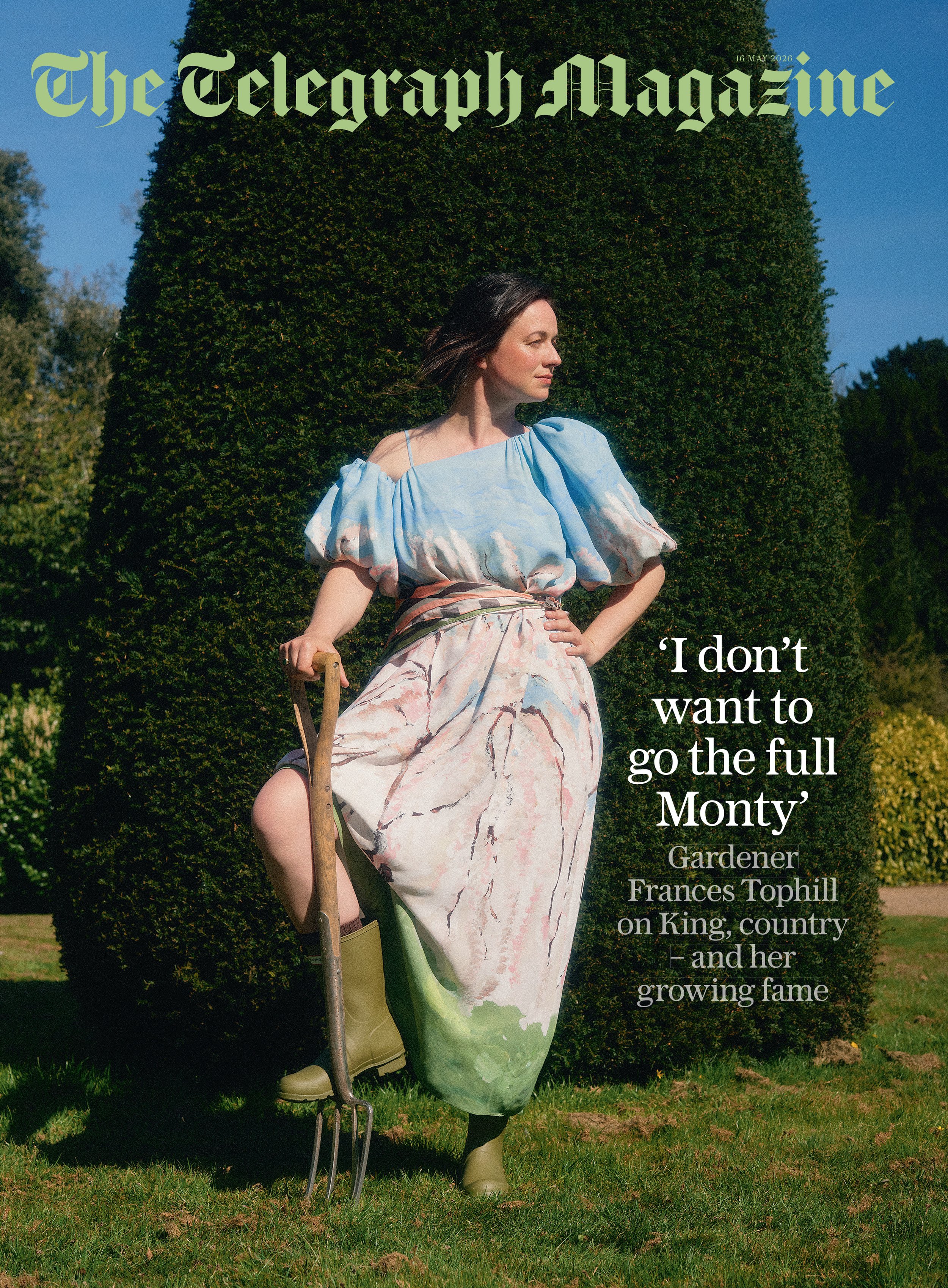
“There is a kind of expectation when you work as a gardener that we’re nice people,” says Frances Tophill, one of the most famous – and famously nice – gardeners on our television screens. For the past 10 years she has shared airtime with Monty Don, another famous, nice gardener. “When you work on Gardeners’ World, everything is lovely. Everything’s nice. You have that slight pressure – or an assumption – that you’re lovely,” she says, laughing. “And that’s sometimes a lot, because I can be not-lovely, you know?”
For the avoidance of doubt, Tophill is completely lovely when we meet. But the niceness of Gardeners’ World can be an oppressive mantle to someone who took it on at the age of 26. The show, which has been running on the BBC for more than 58 years, is ASMR for the middle-aged and beyond; it’s so relaxing that its mere theme tune can induce a sense of calm bordering on the opioid. It has birds tweeting, plants (mostly) growing how they should, and gardening without the personal kneeache. It is, as Tophill says, so nice.
She describes the version of herself that we see on television as something like her phone voice: a mask to hide her “secret self”. Outside what the cameras capture, Tophill is more subversive. “I like to be a bit naughty, but in a very quiet, passive sort of way,” she says. To her, there is more to gardening than people – or even plants – being nice.
Take her show garden, four years ago, at Gardeners’ World Live at the NEC in Birmingham. It was like a dystopian movie set: rusted water butts, thick chains directing the flow of scarce rain, old sinks used as planters, and a teetering corrugated iron shed up a steep steel staircase. It was like something out of Mad Max. As Tophill showed us around the garden on TV, spreading the message of sustainability and of gardening in an increasingly challenging climate, while bees buzzed over the drought-tolerant plants, she never called it what it actually was, nor what she had designed it to be: post-apocalyptic.
“[It was the garden of] someone who’s living post-nuclear fallout, and trying to grow in this post-industrial, post-human landscape,” she says. Tophill had built a monument of death and doom in the middle of the flower show, as a warning, and then stood among it, being lovely. She won best in show.
Read more at The Telegraph Magazine.